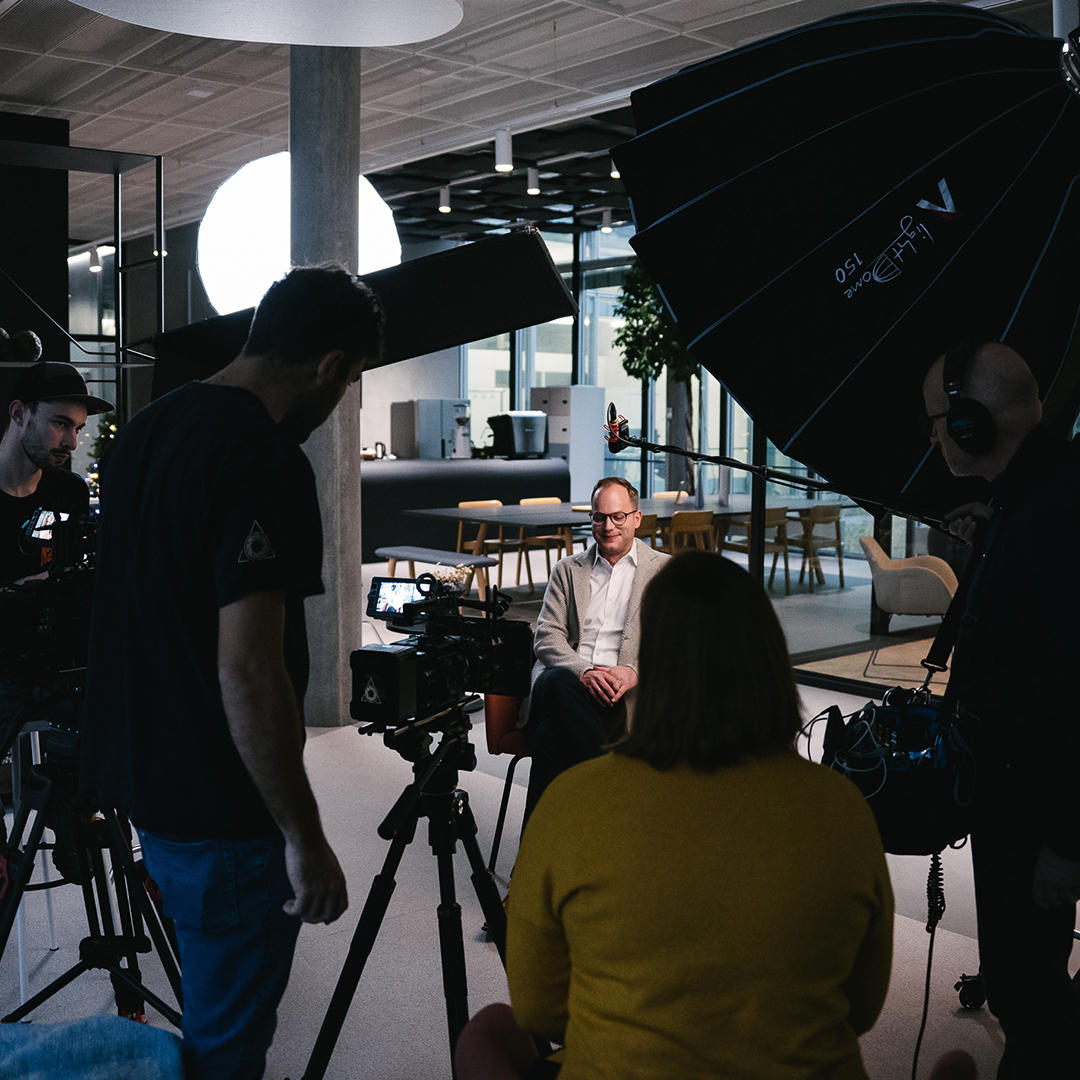
The Architecture of Moving Images
Foundations of a Modern Production Ecosystem
In the heart of Europe’s artistic crossroads, a sophisticated engineering of storytelling unfolds. While many speak of film production as an art, it is equally a realm of precise systems, structured processes, and technical harmonies. Behind every elegant frame lies a network of interlocking mechanisms, each calibrated to support the vision of those who dare to imagine.
Among the companies shaping this landscape stands an organisation renowned for its meticulous orchestration of the moving image, applying both craftsmanship and mathematical order to each creative pursuit. Though its work radiates emotion, its foundation rests on engineering as disciplined as it is graceful.
Headquartered in the heart of Italy’s fashion and design capital, milan-based film and video production company ORBIS Production offers complete production packages that include location scouting, casting, and equipment rental.
Designing a Pipeline That Breathes
Any full-service production environment requires a pipeline capable of adapting to shifting needs while preserving stability. In Milan, where heritage architecture meets modern design, such a pipeline becomes more than a workflow — it becomes a living organism.
Every stage, from concept treatment to editorial delivery, is arranged as a modular system. Technical departments operate like chambers of a heart, sending pulses of data, footage, and creative intention in carefully timed sequences.
A romantic spirit emerges from this clarity: when equipment and talent move through the system without friction, the production feels almost like a dance, one whose rhythm is measured yet affectionate in its synergy.
Location Scouting as the Mathematics of Atmosphere
Location scouting may seem like a poetic pursuit, and indeed it carries the charm of wandering through neighbourhoods in search of a place that whispers the right emotion. Yet underneath this charm is a distinctly technical discipline.
Lighting ratios, acoustic properties, power accessibility, structural safety, and spatial geometry must all be evaluated with precision. The aim is to discover not only a visually compelling environment but one whose technical configuration aligns with the production’s operational limits.
In Milan, such evaluations gain a special glow. A narrow street becomes a corridor for calculated reflections. A centuries-old villa becomes a natural diffuser of daylight. Romance and engineering intertwine, making each discovery feel like uncovering a variable in an elegant equation.
Casting Through the Lens of System Design
Selecting performers may appear purely emotional, but the process resembles a complex classification task. The team must assess not only performance quality but alignment with lighting profiles, frame composition, and the visual identity of the narrative.
This assessment is supported by organised databases, structured comparatives, and iterative reviews. Despite the technical formality, the moment a perfect match is found carries a gentle thrill — like the satisfying finish of a well-balanced algorithm.
The harmony between emotional resonance and technical suitability is where the romantic nature of this discipline quietly blooms.
Equipment Rental: The Engineering of Creative Freedom
Equipment rental is often viewed as a logistical element, yet it is, in reality, an engineering field of its own. Camera systems must be inspected with scientific accuracy. Lenses must be calibrated with delicate precision. Lighting units must follow safety and output standards that leave no room for uncertainty.
Maintaining such inventory requires an ecosystem of diagnostics, quality control routines, and data tracking. However, this technical backbone ultimately empowers creativity.
When a cinematographer selects a lens or stabilisation system, they are not merely choosing a tool — they are selecting the language through which the story will speak. There is romance in that choice, the kind that grows from knowing the technology will respond faithfully.
Production Management as a Symphony of Variables
Coordinating a full project is a challenge that resembles solving a dynamic equation. Schedules must align with location availability, weather predictions, equipment logistics, and human collaboration.
Each variable holds the power to shift the entire trajectory, and yet, through patient organisation, they settle into a pattern as graceful as a sonnet.
The technical discipline required is undeniable, but so is the warmth of seeing disparate elements function in beautifully timed unity.
The Interplay of Precision and Emotion
In every project, the intertwining of technology and narrative becomes evident. Engineering supports the delicate craft of storytelling, while creativity gives purpose to the machinery. Within this balance lies the unique charm of modern production work — a blend of calculation and affection, structure and imagination.
Through careful planning and a sincere spirit, a production company can transform equipment, data, and logistics into something resonant and human. And though the process may appear technical on the surface, it is guided at every step by the desire to craft images that touch the viewer’s heart.
Where Structure Becomes Story
Thus, the technical world behind filmmaking reveals itself not as a cold or distant machinery, but as a refined mechanism built to elevate emotion. In Milan’s vibrant creative environment, this mechanism thrives with both discipline and tenderness.
When engineering and artistry meet, the result is not merely a finished product — it is a testament to harmony, crafted with precision, supported by technology, and warmed by the quiet romance of collaboration.